The visitors are there. Here's what it takes to capture them right now.

I was in a Visit Victoria industry session on Friday. The headline: Victoria's visitor economy hit $48.6 billion in the year to March 2026. A new record. The room felt good about it. As it should.
But I've spent the last few weeks sitting across the table from regional food and wine operators, and the conversation on the ground sounds different to the headline. Visitors are coming. Revenue isn't always following. So here's the operator's read on what the data actually means… and what to do about it.
The domestic market: appetite is there, spend is tighter
Intrastate overnight travel accounts for 77% of overnight expenditure in regional Victoria. That's your core market. And right now, trip volumes are holding but spend per trip is softening. Cost-of-living pressure is showing up in the numbers.
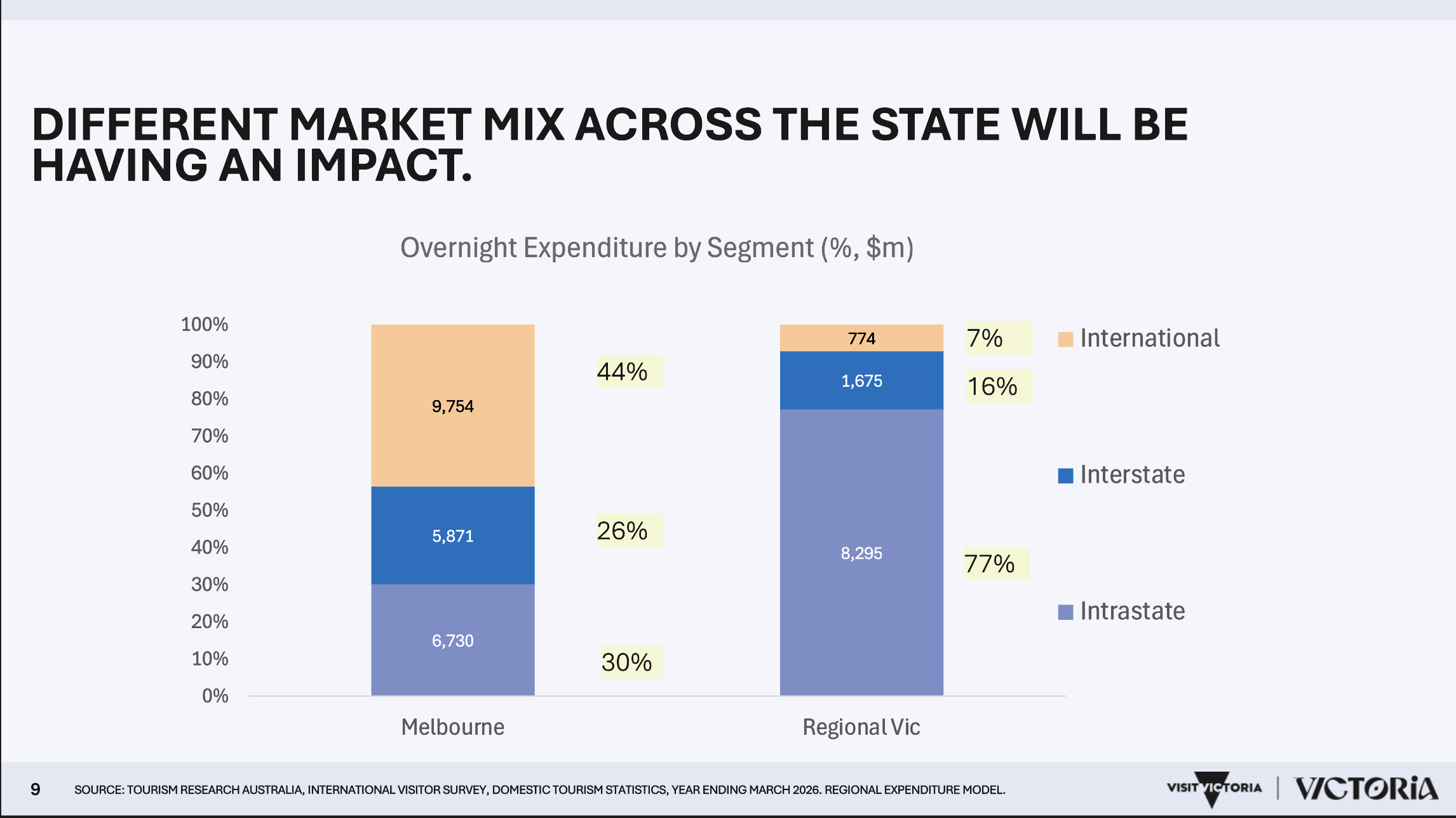
What that means practically: you're unlikely to grow revenue by volume alone this year. The question is how much visitors spend when they arrive, and whether they come back.
Three things worth checking.
Your offer mix: do you have something at every spend level, or is your only entry point a premium one?
Your conversion at the point of visit: are database sign-ups being made consistently. Are DTC/loyalty clubs being presented with confidence. Is there a post-visit email sequence doing meaningful follow-up work?
And your value communication: if it's not immediately obvious why your experience is worth the trip, tighter budgets mean faster decisions to pass.
The international opportunity
UK visitors are up 35% year on year, well above pre-COVID levels. China remains the largest spend market at $3.55 billion. India is growing in volume.
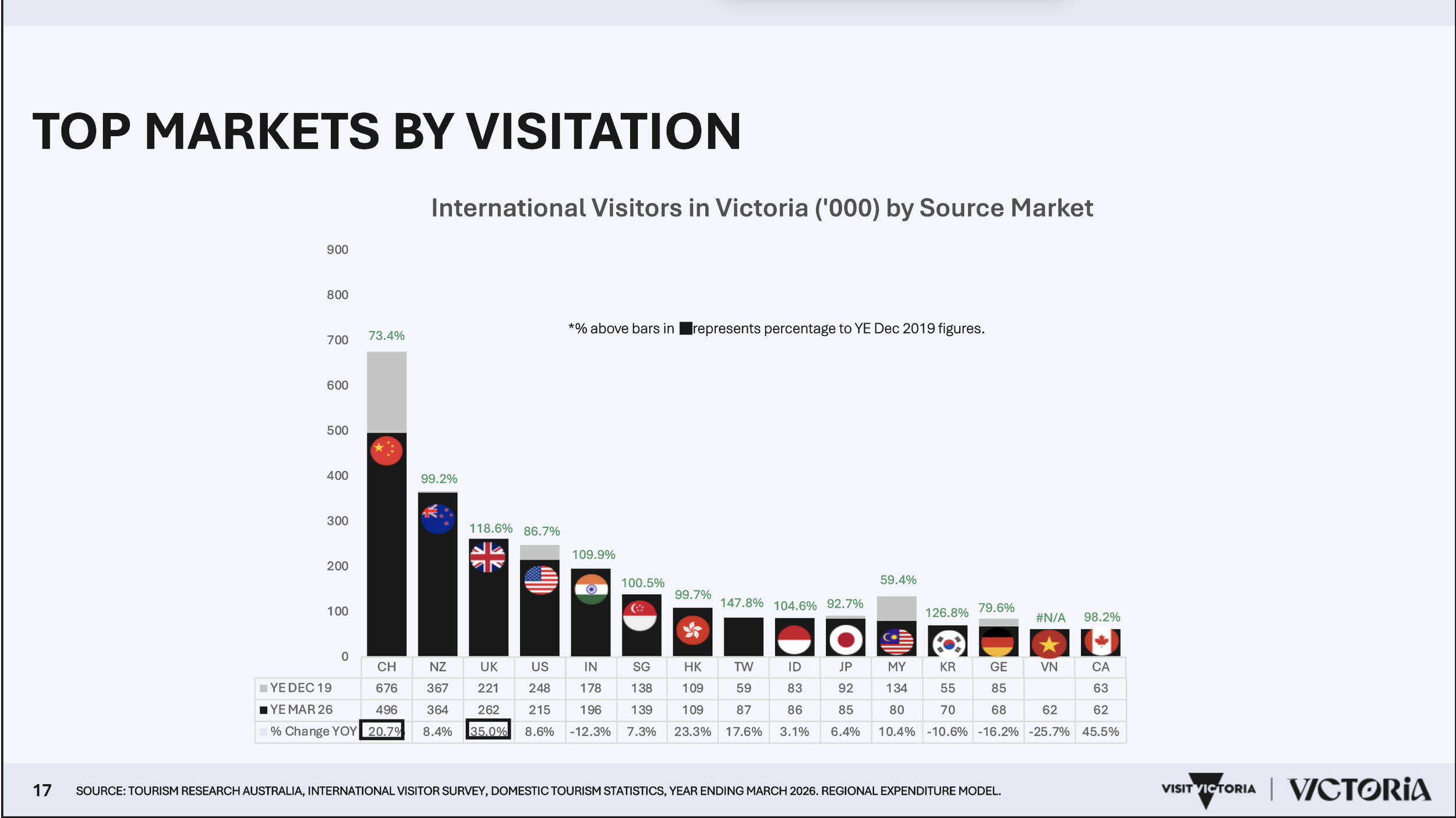
Regional operators tend to treat international visitors as someone else's customer. That's worth reconsidering. They often spend more per trip and travel mid week!
A practical starting point: If your Australian Tourism Data Warehouse profile is out of date or missing a winter offer, you're invisible on visitvictoria.com while the campaign is driving traffic there. Add a deal (a package, a discount, a bonus experience) and make sure your winter offerings are listed and current.
The Visit Victoria winter campaign: how to use it
"Come Winter in Victoria" is running right now across Netflix, Prime Video, Meta, TikTok, Google, Qantas, Expedia, and outdoor formats state-wide. One of the hero executions features Tarrawarra in the Yarra Valley. So it’s great news that regional food and drink is front and centre!
Here’s the thing though, Visit Victoria builds awareness. It doesn't build bookings to your specific business. That part is yours to own.
Think of it another way: Visit Victoria is spending significant money putting Victoria's winter experiences in front of people who are already open to travelling. When those people go looking, searching Google, checking Instagram, landing on your website , what they find is either going to convert them or lose them.
So before you think about the campaign, think about the foundations.
Is your website easy to navigate and your booking path obvious?
Is your Google Business Profile current with recent photos and accurate hours?
These are the things that determine whether the demand Visit Victoria generates ends up with you or with someone else.
Once the foundations are solid, here's how to actively work it.
Send an email with a reason to travel now. Not a general winter newsletter, a specific offer with a deadline. People need a reason to book this weekend rather than wait for spring. A winter tasting experience, a Friday night dinner series, a two-night package with a cellar door visit included. Something that makes the decision feel timely.
Work your own audience. The operators who benefit most from a campaign like this aren't the ones waiting for Visit Victoria to send visitors their way. They're the ones consistently showing up in their own customers' inboxes and feeds, so that when those customers are ready to travel, they already know where they're going.
Create content that connects to the season. You don't necessarily need to usee the official branded tiles. What you do need though is content that reflects what your experience feels like right now, in winter — the fire going, the pinot poured, the mist on the vines. Specific, sensory, yours. That's what stops the scroll.
The campaign is doing its job. The question is whether your business is set up to benefit from it.
What the data can't tell you
The macro numbers are healthy. But in conversations with operators lately, the pattern I keep seeing isn't an awareness problem. It's conversion and retention.
A business with four disconnected digital systems where customers hit broken links and land on checkout pages that don't work. A cellar door team skipping the database ask on busy days because it felt awkward. A business making its first move into direct-to-consumer with no wine club, no CRM, and no email program in place.
None of these businesses were failing. All were leaving meaningful revenue on the table.
A useful question to sit with: where does your customer journey break down between a great in-person experience and an ongoing relationship? If you're not sure, that's the answer.
One more thing: the Regional Events Fund
REF has supported 219 events since May 2024 and driven more than 485,000 out-of-region visits. Funding only runs to June 2027. Food and drink events are in scope and Grampians Grape Escape and Dark Side of Wine (Rutherglen) are two events funded in the current round.
If you're thinking about an event-led play or a shoulder season activation, talk to your regional tourism organisation about what's possible. And don’t wait!
If you read this and felt a quiet "that's us" at any point, I have a limited number of 30-minute Growth Calls available this month.
They’re free and no obligation, just a focussed conversation about where your business is right now and where the most immediate opportunity sits.