How I Developed a Strategic Plan for a Major Food and Wine Event to 2030
For organisations with a strong legacy, the challenge isn’t always about immediate survival. More often, it is about ensuring that decisions made today still hold up five years from now. Without a long-term strategy, boards can find themselves making short-term choices that don’t always ladder up to a clear and unified direction.
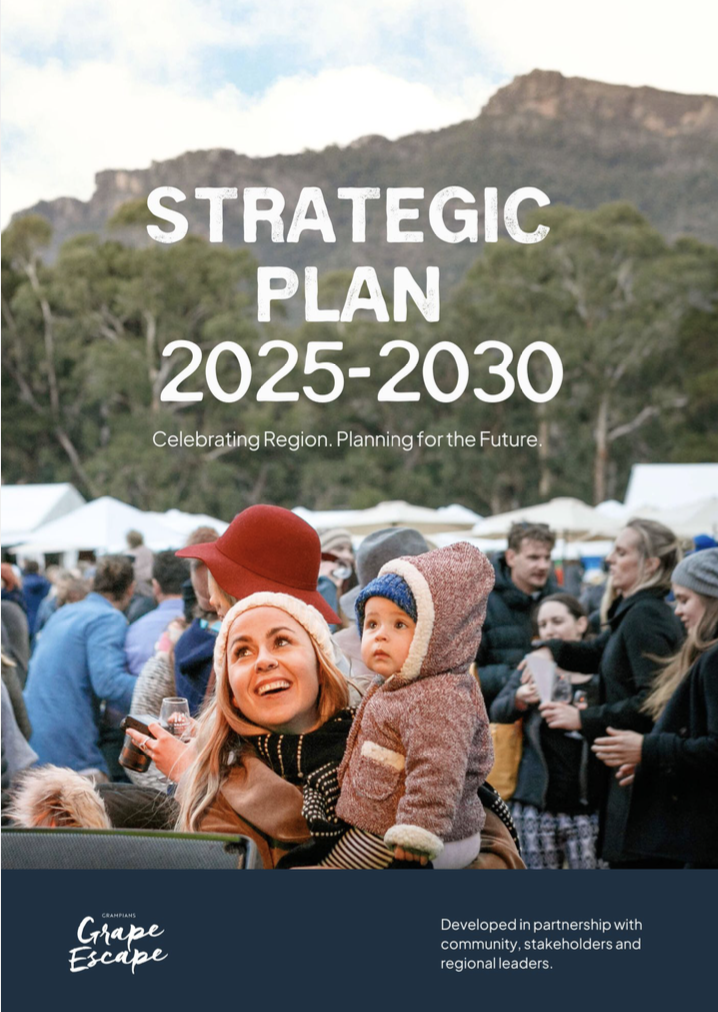
That was the position facing Grampians Grape Escape, one of Victoria’s longest-running regional food and wine festivals. The event had loyal audience and strong community support but the board recognised it was time to step back and set a clear course through to 2030.
My Role
I was engaged to design and lead the entire strategic planning process. My role was not to deliver an operational plan, but to work with the board, Director, and key stakeholders to create a long-term vision, align governance, and test the financial resilience of the festival under different scenarios.
The Process
I structured the project in three clear phases:
Discovery & Insights
Reviewed three years of ticketing, marketing, financial and post-event data.
Conducted board and funder interviews, plus a survey of 30+ stakeholders.
Benchmarked against competitor events and regional tourism strategies.
Alignment & Facilitation
Presented insights back to the board to test assumptions.
Designed and facilitated two in-region workshops to co-create the 2030 vision, success measures, and strategic pillars.
Used scenario planning to stress-test different financial futures and funding models.
Plan Development
Drafted a comprehensive strategy anchored by five pillars: Audience, Brand & Marketing, Stakeholders & Sponsors, Operations & Risk, and Sustainability & Legacy.
Built a financial sustainability model, risk matrix, and contingency pathways.
Delivered a practical roadmap alongside the 2030 vision, ensuring the plan was both ambitious and actionable.
The Outcome
The result was a board-endorsed strategic plan to 2030 that provides:
A unified long-term vision to guide decision-making.
Clear pillars and measures of success, giving the board and management team a shared language and priorities.
A scenario framework to safeguard delivery.
A governance pathway to strengthen succession, risk oversight, and long-term continuity
Why It Matters
This project demonstrated the real value of stepping back from day-to-day delivery and investing in strategic clarity.
For the board, it means less debate about direction and more confidence in decision-making.
For the Director and team, it provides a roadmap that balances ambition with practical next steps.
And for the region, it ensures the festival continues to deliver community and economic impact well beyond 2030.
If you’re a CEO or Board Chair considering your own long-term strategy, my role is to help you design the process, guide the conversation, and leave you with a plan that works in practice, not just on paper.